
Delving into the realm of Professional Smart Home Installation Costs Breakdown, readers are invited to explore a nuanced discussion that offers valuable insights and practical information. This guide aims to shed light on the various factors influencing costs, breakdown of typical expenses, installation process details, and a comparison between professional and DIY options.
Factors Affecting Professional Smart Home Installation Costs
When it comes to determining the cost of professional smart home installation, several factors come into play. These factors can significantly impact the overall expenses involved in setting up a smart home system.
Complexity of the Smart Home System
The complexity of the smart home system is a crucial factor that influences installation costs. A more intricate system with advanced features and components will require more time and expertise to set up, leading to higher installation costs. For example, installing smart lighting, security cameras, thermostats, and audio systems will be more expensive compared to a basic smart home setup.
Size of the Property or Home
The size of the property or home also plays a role in determining the installation expenses. Larger homes with more rooms and areas to cover will require additional devices and equipment to ensure comprehensive smart home coverage. As a result, the cost of installation will increase to accommodate the needs of a larger property.
Additionally, the layout and structure of the home can impact the complexity of the installation process, further affecting the overall costs.
Breakdown of Typical Costs Associated with Smart Home Installation
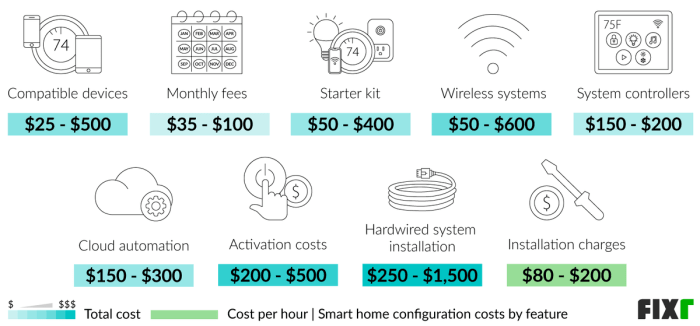
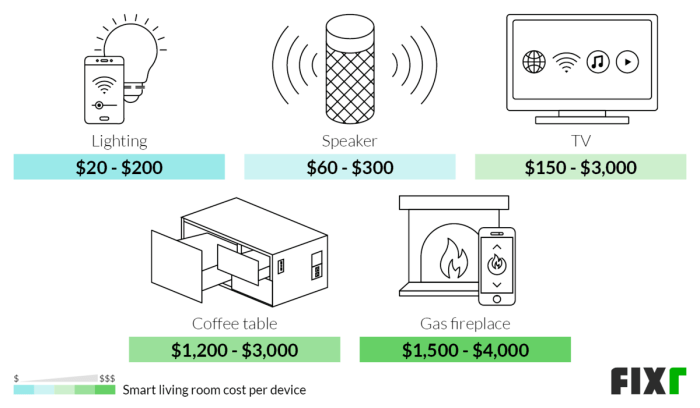
When considering professional smart home installation costs, it is important to understand the breakdown of expenses associated with various components and services. Below, we Artikel the average costs for popular smart home devices, installation fees, and factors that can influence the overall expenses.
Smart Thermostats
Smart thermostats are a popular addition to smart homes, offering energy efficiency and convenience. On average, a smart thermostat can cost between $150 to $300, depending on the brand and features. Installation fees may range from $50 to $150, depending on the complexity of the setup.
Security Cameras
Security cameras are essential for home monitoring and surveillance. The cost of a single security camera can vary from $100 to $400, depending on the resolution, features, and brand. Installation fees for security cameras typically range from $75 to $200 per camera, depending on the mounting requirements and wiring needed.
Smart Lighting
Smart lighting systems allow homeowners to control lighting remotely and set schedules for energy savings. The cost of smart light bulbs can range from $10 to $50 per bulb, depending on the brand and connectivity. Installation fees for smart lighting setups may vary from $50 to $150, depending on the number of fixtures and complexity of the installation.
Additional Charges
In addition to the costs of smart home devices and installation, homeowners may also incur additional charges for services such as smart home consultations, custom programming, or integration with existing systems. These additional charges can vary depending on the scope of work and the expertise required.Overall, the total cost of professional smart home installation can vary significantly based on the brand and quality of devices chosen, as well as the complexity of the installation.
It is essential for homeowners to consider these factors when budgeting for smart home upgrades to ensure a seamless and efficient installation process.
Installation Process and Time Estimates
When it comes to professional smart home installation, understanding the process and time estimates is crucial for planning and budgeting. Let's delve into the typical steps involved in a smart home installation and the estimated time required for different types of smart home devices.
Typical Steps in Professional Smart Home Installation
- Assessment and Planning: The first step involves assessing your home layout, existing devices, and your specific requirements. A detailed plan is then created to determine the placement of devices and the overall system design.
- Device Installation: This step includes mounting and installing smart devices such as thermostats, cameras, sensors, and smart locks at designated locations in your home.
- Wiring and Connection: Professional installers will handle the wiring and connection of devices to ensure they are seamlessly integrated into your smart home system.
- Configuration and Testing: Once all devices are installed, they are configured and tested to ensure they are functioning correctly and communicating effectively with the central hub or control panel.
- User Training: The final step involves providing you with training on how to operate and manage your smart home system effectively.
Estimates on Time Required for Installing Smart Home Devices
- Smart Thermostat: Installing a smart thermostat typically takes around 1-2 hours, depending on the complexity of your HVAC system.
- Smart Cameras: Each smart camera can take 30 minutes to 1 hour to install, including mounting and connection to the network.
- Smart Locks: Installing a smart lock usually takes 1-2 hours, considering the need for precise alignment and testing.
- Smart Lighting: Setting up smart lighting can range from 1-3 hours, depending on the number of lights and the complexity of the system.
Impact of System Complexity on Installation Duration
The complexity of your smart home system can significantly impact the duration of the installation process. More devices, intricate wiring, and advanced automation features can extend the installation time. It's essential to discuss the system complexity with your installer to get a more accurate estimate of the installation duration.
Comparison of DIY vs. Professional Installation Costs
When considering smart home installation, it's essential to weigh the cost implications of hiring professionals versus opting for a do-it-yourself approach.
Professional installation may come at a higher price, but it offers advantages in terms of expertise and warranties that can provide peace of mind and ensure a seamless setup.
Advantages of Professional Installation
- Professional expertise ensures that the installation is done correctly the first time, reducing the risk of errors that could lead to costly repairs down the line.
- Warranties provided by professional installers can cover any issues that may arise post-installation, saving you money in the long run.
- Professional installers are up-to-date with the latest technology and best practices, ensuring a more efficient and effective setup.
Scenarios for DIY Installation
- If you have experience with smart home technology and feel confident in your abilities, opting for a DIY installation can be a cost-effective choice.
- For simple smart home systems with basic components, such as a smart thermostat or smart lighting, DIY installation may be straightforward and manageable for those with some technical know-how.
- If budget constraints are a concern and you are willing to invest the time and effort to learn and install the system yourself, DIY can be a more economical option.
Epilogue
In conclusion, navigating the landscape of professional smart home installation costs can be complex but understanding the breakdown of expenses and factors involved can empower homeowners to make informed decisions. Whether opting for professional installation or considering a DIY approach, this guide equips readers with essential knowledge to embark on their smart home journey confidently.
FAQ Compilation
What factors can influence professional smart home installation costs?
Factors such as the complexity of the smart home system, the size of the property, and the quality of smart devices can impact installation costs.
What are the typical costs associated with smart home installation?
Costs vary based on components like smart thermostats, security cameras, and smart lighting, with additional charges for installation fees.
How long does a professional smart home installation take?
The time required depends on the types of smart devices being installed and the complexity of the system, with estimates provided by professionals.
Is DIY installation a cost-effective option compared to hiring professionals?
While DIY installation may seem cost-effective, professional installation offers expertise and warranties that can be advantageous in the long run.